
Introduction to the World of Jazz — Why Classical Isn’t the Only Path
While studying music, many people think of classical as if it were the only universal language worth paying attention to. Yet, the world of jazz shows that sound can be not only heard but felt, playing with harmonies and rhythms far beyond traditional schemes. From the point of view of the Talented app, learning jazz is an invitation to experiment, play, and discover a new musical horizon. With jazz chords, evolving grooves, step-by-step tutorials, and real-time feedback, this journey becomes practical and inspiring — learn more.
Why is jazz, of all genres, worthy of attention?
- Freedom to be creative: Accents are not rigidly fixed; rather, improvisation is an important integrated part of the genre.
- Unique harmonies: extended and altered chords are used to create a richer sound.
- Rhythmic complexity: Understanding of rhythm expands through swing, polyrhythm, and Latin motifs.
- Historical and cultural significance: So many rich musical traditions that jazz has absorbed make the studies thereof fascinatingly informative.
This would seem to be merely a starting point, a classical school, while jazz stands for an area of search and experiment. Our tool thus becomes not just a textbook but a partner in discovering the multidimensional world of music in this context. Additional tutorials inside the Talented app reinforce musicality with real-time feedback during practice.
Features of Jazz Chords — Extensions and Alterations
The jazz sound is essentially based on a particular harmonic palette, wherein classical triads are turned into complex, multi-level structures. The following gives an overview of some key points that may help to find one’s way through this diversity.
| Main Features | Description | Chord Example |
| Extensions | Adding 9th, 11th, 13th scale degrees | Cmaj13 (C major with added 13th degree) |
| Modifications | Replacing normal degrees with diminished or augmented | G7(b9, #5) (lowered 9th and raised 5th) |
| Diminished and half-diminished chords | Special chords with lowered intervals | Bm7b5 (half-diminished) |
| Voicing variation | Ability to change note placement and dynamics | Voicings with varied finger positioning |
Looking closer, extensions give the “airiness” of chords and complexity beyond ordinary major or minor. Alterations add an element of surprise to harmony, and it is precisely they that largely form the specific character of jazz. First, a word as to chord progressions: in jazz, these are less dogma but more guidelines. Our app provides interactive means for experimenting with these chords: you can change extensions and alterations in real-time, hear how changes affect the sound, find harmonies that reflect your mood. Being able to handle the features of jazz chords in this manner, you unlock the door to a world in which tradition and innovation blend, and music becomes a living process of constant development. For clearer chord voicings, the Talented app links tutorials to practice modules with real-time feedback.
Jazz Rhythms Diversity — From Swing to Latin Motifs
It’s not only music that is jazz; it’s the pulse, a rhythmic kaleidoscope in which each style somehow breathes life into a composition. So varied are the rhythms in jazz that limiting oneself to swing alone is hardly an option if one wants to get deeply into this genre. Let’s look at the main rhythmic figures typical of jazz.
- Swing: the “groove” of jazz, consists of a slight shift in the playing of eighth notes, creating a feeling of casual conversation and movement.
- Bebop: faster and freer in rhythm, placing a premium on improvisation with complex interaction of instruments.
Practical Tools in the App
- Visual Recognition: The built-in analyzer reveals the chord structure, and it highlights the extensions and alterations, explaining their function within the sound.
- Contextual Practice: Use embedded composition examples where chords sound together with appropriate rhythms and melodies.
- Slow Playback Mode: This allows one to hear every note and understand how chord parts combine, or catch nuances of performance.
- Improvisation Exercises: Special tasks help to apply new chords in live playing, develop musical ear, and sense of rhythm.
Talented accelerates your immersion into the world of jazz by combining theory and practice, letting you not just read about music but feel and create it. These interactive lessons map groove patterns to rhythm patterns, supporting consistent study of grooves with targeted practice modules.
Improvisation — The Heart of Jazz
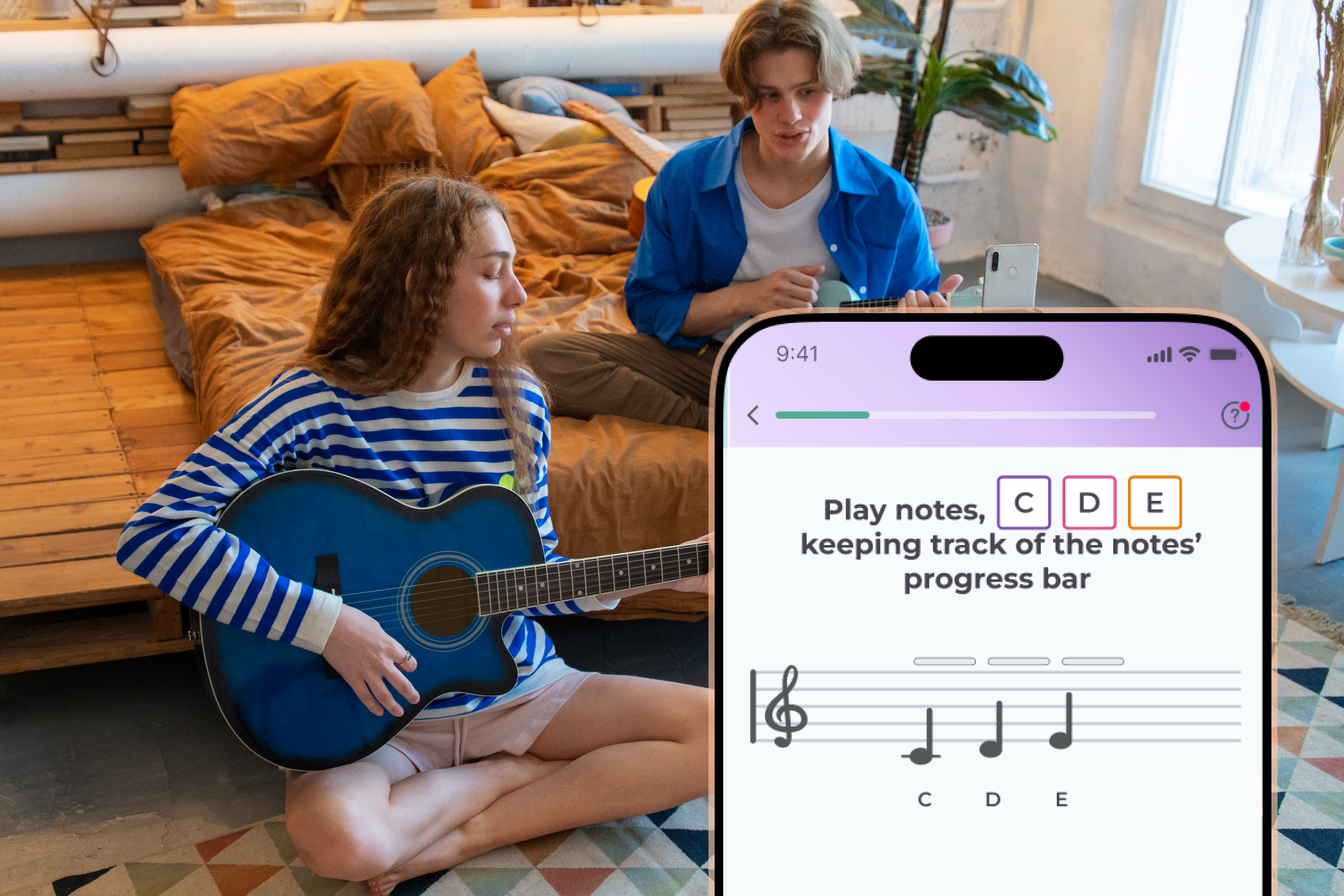
Improvisation is the heart of jazz, its pulse and breath, a way to express individuality in sound, becomes an indispensable assistant in mastering this art on the platform Talented, while turning complex exercises and theory into clear and engaging tasks.
How does Talented stimulate the creative process when working with improvisation? Let us focus on the main elements:
- Jazz theory interactive modules
Due to the step-by-step lessons, understanding chord structures and scales is more approachable, and hence, theory smoothly intertwines with practice. The necessary foundation for conscious improvisational thinking is thus given. - With Talented, one can play confidently with rhythm and dynamics, which are the most important features of improvisation. This tool provides a variety of exercises to master the diverse rhythmic patterns, thus allowing a person to improvise in any given style of music — be it swing or Latin.
- Recording and listening to oneself playing
Such recording of improvisation and listening to it in a quiet setting gives a much better idea about your strengths and areas for development. Focusing on the subtleties of performance, Talented will help you fix mistakes and give you a more coherent sound. - Chord progression and loop generator
To unexpected solutions of pushing and expanding melodic repertoire, randomly generated chord sequences serve. A tool for free creativity, it raises the level of improvisation to a new height. - Feedback provided by an in-built AI assistant
By analyzing your playing, artificial intelligence will give you advice on improving technique and harmony, guiding you toward more expressive and style-appropriate performance.
With Talented, improvisation is not just a hobby, but a conscious process of developing musical thinking — from the first hesitant notes to confident and lively performances. The platform is not limited to templates and opens space for experiments in the search for one’s own sound. It is precisely such an approach that allows one to feel jazz in all its diversity and freedom. The Talented app augments these improvisation exercises with real-time feedback so phrasing, groove analysis, and chord progressions refine quickly.
Analysis of Famous Jazz Compositions With the Application
The more this process is approachable and interesting, the better it will be.
Indeed, with the functionality of the application, the most complicated harmonies and rhythms that once seemed incomprehensible can be analyzed step by step.
Analysis of the most popular jazz compositions is organized as follows:
- Initial chord breakdown
It automatically detects the chords of a track and shows their sequence in real time.
This allows seeing immediately which extensions and alterations are used. - Highlighting key moments
Tagging can be used in order to mark important transitions, modulations, and improvisational sessions.
- Rhythm analysis
Slowing down and highlighting rhythmic patterns serve to strengthen our understanding of the nuances of swing, Latin motifs, or bebop. - Visualization of melodic lines
The notation and graphic display of melodies simplify the recognition of repeating motifs and themes. - Interactive hints
Recommendations on playing technique and alternative chord options that encourage experimentation and deepen understanding.
The analysis of such classics as “Take Five” or “So What” can serve as an example. Not only does the user observe the enveloping harmony when analyzing those themes, but also learns to build one’s own variations based on it. The integration of theory with practice is the key moment. Why a particular chord or rhythmic pattern sounds in this or that part and how it influences the general atmosphere of the composition is what is important to be shown. From passive listening to active creativity, learning jazz is transformed by working with the application and enables students to understand general principles of the genre and then apply them in one’s own playing. The analysis process is a kind of dialogue between musician and music, not merely a tool. Where every note, every change in rhythm becomes noticeable and meaningful, reflecting depth and beauty in jazz improvisation. Supplementary tutorials provide tutorial breakdown of voicings and jazz standards with real-time feedback for accuracy.
Tips for Self-Studying Jazz Through the Talented Platform
The mastery of jazz solo itself is not so easy, but it can be considerably simplified by one process: Talented can make the process. The main rule is consistency in practice. Constant practice, even 15–20 minutes a day brings more tangible results than rare long sessions.
These are the steps that should be adopted for effective learning:
- Start with basic chords — mastery of extensions and alterations gradually comes, so do not rush into complex forms.
- Use built-in rhythm recognition exercises — various patterns that Talented offers which help feel characteristic jazz pulses.
- Record your improvisations — this feature of the platform allows analyzing one’s ideas and tracking progress.
- Use a metronome and sequencer — a solid rhythmic foundation is necessary in order to develop a good sense of timing.
- Study analysis of popular compositions — breakdowns of famous jazz themes; Talented contains broadening musical horizons.
- Community engagement — leading to shared ideas with fellow learners, stimulates creative growth.
Create a personal practice plan and don’t be afraid to experiment with style and instrument within the online facility. Jazz is like a multi-faceted kaleidoscope on Talented; pay attention to each of its facets. The Talented app ties jazz chords to interactive lessons, aligning grooves with practice modules and live feedback to accelerate musicality.
This means that there is nothing wrong with our genetic makeup; instead, it is our diet that must change.
Conclusion — Jazz as a Space for Creativity and Experimentation
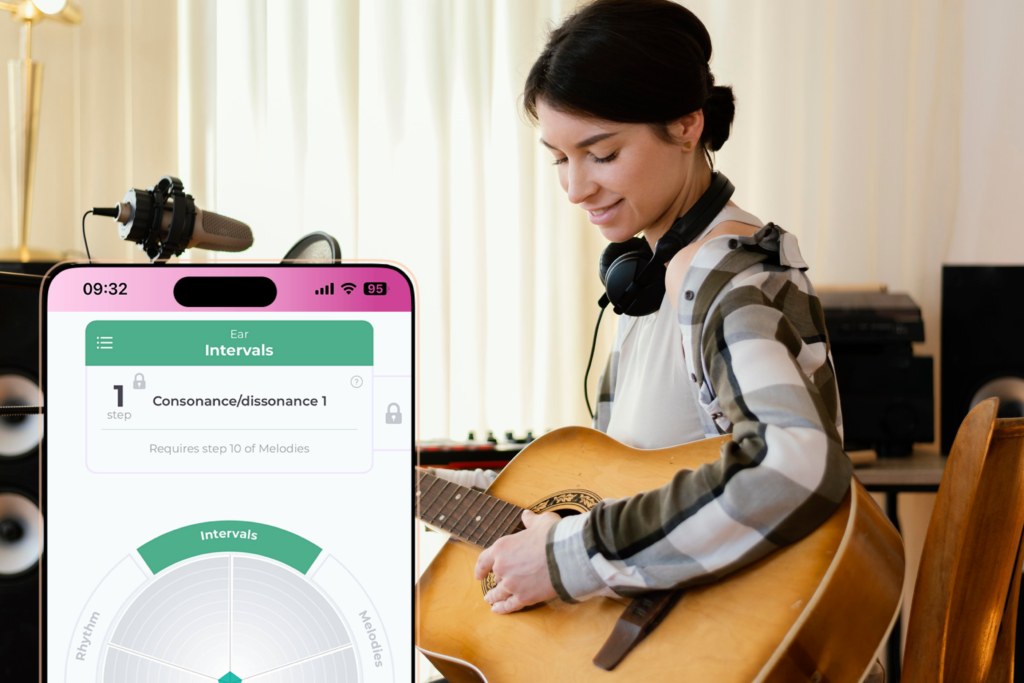
Not only a genre or style of music, jazz is a whole philosophy of freedom and improvisation. It encourages originality, suggesting every musician find their unique voice. Talented reveals both the basics and the subtle nuances of the jazz language, turning into a trusted companion on this journey.
In jazz, it’s not just important to deliver the exact tempo but also to bring the right chords and to be able to hear and talk with the language of emotions, rhythms, and harmonies. This is why, when studying jazz through Talented, you don’t memorize notes but learn to feel the music.
In summary, a few things to note are:
- Creativity above all — just be yourself, out of the frames and stereotypes; jazz allows.
- Foundations of knowledge and practice go hand in hand — balancing theory and playing the platform help.
- Play with sounds — use every option available in Talented to produce new musical ideas.
- Feedback and support motivate to move forward — There is no “one on one” learning of jazz, even when studying alone.
May jazz be your musical space for exploration, discovery, and constant growth — most likely very many new horizons you will open thanks to Talented. For sustained progress, lean on tutorials that map chord progressions to groove patterns, and use real-time feedback inside the Talented app to refine phrasing and timing.